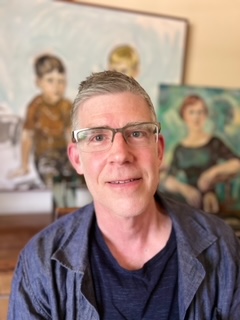
Christopher Meyer
Private Practice, Psychoanalyst, Faculty, and current President of the Board of Directors of LSP; founding member of the California Psychoanalytic Circle of the Freudian School of Québec.
Private Practice, Psychoanalyst, Faculty, and current President of the Board of Directors of LSP; founding member of the California Psychoanalytic Circle of the Freudian School of Québec.
The work of the letter in psychoanalysis: Freud’s letters, Lacan’s return to Freud, speech and writing in the clinic and School of psychoanalysis
This seminar explores the centrality of the letter in the history and experience of psychoanalysis as a rupture in the episteme of the speaking-being. A consideration of the letter takes us to the heart of what is at stake in the transmission of a subject’s truth and knowledge as regards the unconscious. As we read Freud’s early letters to Wilhelm Fliess we witness a sustained correspondence and even a working through of an imaginary transference for Freud. Even as Freud undergoes his disillusionment of this transference, these letters establish an address for Freud that concerns his discovery of a censored as well as a repressed unconscious. And the address will be sustained throughout the remainder of his written work, or what we now refer to as Freud’s Standard edition.
The seminar argues that Freud’s address will await Lacan’s return address, his return to Freud, to restore the practice of the letter as one of an inscription that repeats and insists in the life of the subject who is represented by and through the signifier. Lacan’s return to Freud results in a move from the man of letters, or the transmission of psychoanalysis through the question of the written and what can be written about it, to a consideration of the letters of the body as inscriptions of the Real, of jouissance, that select signifiers representing a subject to a Real unconscious.
The seminar takes the form of a lecture and reading group format. Participants will also be asked to take up an epistolary correspondence with a fellow seminar participant as we make our way throughout the year as a way of engaging in a written record of what arises over the course of its experience.
Readings:
Certeau, Michel de. (2000). “Lacan: an ethics of speech,” Heterologies: discourse on the other. Trans., Marie-Rose Logan, Minneapolis, University of Minnesota Press.
Freud, S. (1995). The Complete Letters of Sigmund Freud to Wilhelm Fliess, 1887-1904. Translated and edited by Jeffrey Moussaieff Masson. Cambridge: Harvard University Press.
Freud, S. Selections from The Standard Edition of the Complete Psychological Works of Sigmund Freud. Ed. J. Strachey.
Lacan, J. (2006). “The Instance of the Letter in the Unconscious or Reason Since Freud,” Écrits. (2006). Trans. Bruce Fink, New York: Norton.
Lacan, J. Selections from the Seminars of Jacques Lacan, Seminars XX, Encore, and Seminar XXI, Les Non-dupes Errent, 1973-1974. Trans. C. Gallagher
Lacan, J. (1990). “Founding Act,” in Television, A Challenge to the Psychoanalytic Establishment. Trans. Denis Hollier, Rosalind Krauss, and Annette Michelson. New York: Norton.
Lacan, J. (1990). “Letter of Dissolution,” in Television, A Challenge to the Psychoanalytic Establishment. Trans. Denis Hollier, Rosalind Krauss, and Annette Michelson. New York: Norton.
Lacan, J. (1990). “The Other is Missing,” in Television, A Challenge to the Psychoanalytic Establishment. Trans. Denis Hollier, Rosalind Krauss, and Annette Michelson. New York: Norton.
---
Dates and times: every 4th Saturday of the month except December, 27 September 2025 through 27 June 2026, 10am–12 noon Pacific Standard Time.
Fee: $60 per session / $40 students, or School Tuition.
Contact: Christopher Meyer, PhD; (323) 930-9662; cmeyerwoeswar@gmail.com.
In your browser — no app to install.
Register for details to receive joining access.
Open to non-members. Guests are welcome to attend.
You'll be asked to sign in or create a free account. You don't need to be a member.