Book chapter
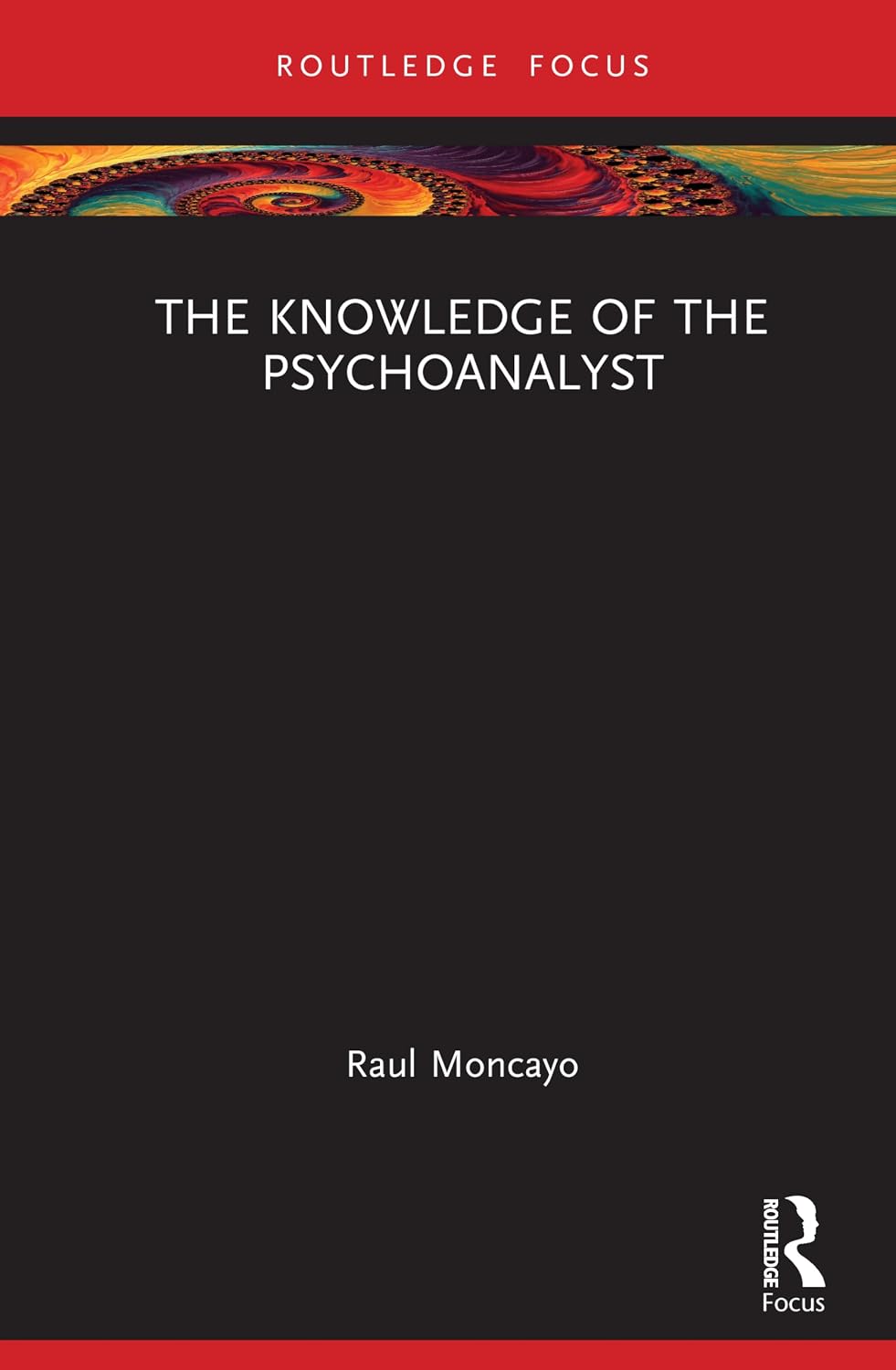
The Knowledge of the Psychoanalyst
Carlos Alberto Jimenez ; Raul Moncayo
In The Knowledge of the Psychoanalyst. Routledge. · 2025
DOI: 10.4324/9781003658702 · ISBN 978-1041111832
Reading Jacques Lacan’s Seminar XIXa, we argue that psychoanalytic knowledge begins from Nicholas of Cusa’s concept of learned ignorance (docta ignorantia), in which ignorance is not a deficit but the ground upon which analytic knowledge becomes possible. We distinguish Cusa’s learned ignorance, or “non-knowledge,” from both simple “not-knowing” as a deficit of facts, and from the Buddhist concept of ignorance as avidyā—the notion that one can accumulate an abundance of data, facts, and understanding yet still remain ignorant of the operation of truth and the analyst’s poetic orientation to knowing. This tension between poetics and understanding is elaborated through the productive difference between Wittgenstein’s early and later theories of language. The Tractatus famously invites silence on matters of the ineffable, since it is silence that allows the unsayable to “make itself” manifest. We read Cusa and early Wittgenstein together to frame the ethical opening by which learned ignorance orients the analyst’s attention to the Real of the symptom operative in the analysand’s speech. Wittgenstein’s Philosophical Investigations then reframes the relation to the unsayable through the theory of language-games and the multiplicity of the poetic function of speech. Our account preserves the value of silence while articulating a theory of interpretation as a poetic operation of language that aims to restructure jouissance rather than extract a univocal meaning. The knowledge of the psychoanalyst is not understanding, but rather what is produced through interpretation as a negative dialectical speech act that facilitates multiplicity and equivocality around the Real in the repetition of the symptom. Truth is the experience of non-knowledge produced in the articulated and sustained work of elaboration, through which the analyst relinquishes the role of the subject-supposed-to-know. This is “truth minus knowledge” as the operative method of interpretation.
Cite
Jimenez, Carlos Alberto, and Raul Moncayo. 2025. “The Knowledge of the Psychoanalyst.” In The Knowledge of the Psychoanalyst. Routledge. https://doi.org/10.4324/9781003658702.